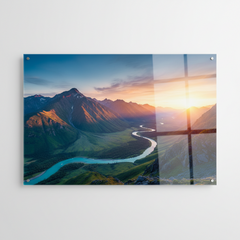
Choose acrylic when you want a vivid, high-gloss picture with a glass-like finish. Consider canvas when you prefer a textured surface, and compare metal when a smooth panel appeals to you. In the acrylic vs canvas prints decision, the room and the photograph matter as much as the material name.
Start by looking at the wall at the time you usually use the room. Then ask whether you want the photograph to feel polished, textured, or clean and graphic. There is no single material that makes every image or room better.
Acrylic vs canvas prints and metal: the quick comparison
| Question | Acrylic | Canvas | Metal |
|---|---|---|---|
| What look am I choosing? | High-gloss, glass-like presentation | Visible fabric texture | Smooth metal-panel presentation |
| What should I check? | Wall position and reflections | Texture, finish, and edge treatment | Coating, finish, and mounting |
| Which photo might I compare? | A vivid landscape or clear portrait | A portrait or image you want to feel textured | A graphic scene or architectural photograph |
| What changes by supplier? | Construction, thickness, and mounting | Fabric, frame, and wrapping | Panel, coating, and mounting |
Acrylic: a vivid picture with a glossy finish
GiftMusea's personalized acrylic prints have a vivid, high-gloss, glass-like finish. They come ready to hang with mounting hardware included and ship flat, carefully protected. This format suits someone who wants the photograph to be a noticeable part of the room rather than choosing texture as the main effect.
The 8 x 12 inch option costs $38.99. Other choices include 14 x 18 inches at $189.99 and 18 x 24 inches at $239.99. Choose by the wall and the image, not by assuming a larger print is automatically a stronger gift. A small photograph placed deliberately can fit a reading corner better than a larger piece squeezed between furniture.
High gloss deserves a lighting check. Look at the intended wall from the sofa, doorway, or desk where the picture will usually be seen. A bright window or a lamp opposite the display may compete with the image through reflections. If that position is distracting, consider another wall or compare a different finish before committing to the material.
Acrylic prints also accept names, quotes, logos, and custom sign-style designs described in the order note. For text-led artwork, plan spacing as carefully as the words. The guide to designing a readable quote for an acrylic print helps you think about a short line that can be read from its intended viewing distance.
Canvas: choose it because you want the texture
Canvas prints use a fabric surface, often stretched over a frame. The texture is part of the presentation, so compare it with the mood you want from the image. A family portrait or a gentle landscape can be a useful starting point when you want to see how a textured treatment changes a familiar photograph.
Check how the supplier handles the edges. If the image wraps around the sides, a face or important detail close to the border may need a different crop. Ask what the listed size describes and whether a frame is included. These choices vary, so do not treat every canvas listing as the same product with a different photograph.
Metal: check the finish behind the label
Metal photo prints commonly use aluminum panels, but the coating and finish can differ. Glossy and matte versions are available from print suppliers, so the word metal alone does not tell you how reflective the finished picture will be. Compare the actual finish description rather than assuming every metal print has the same appearance.
A photograph of a city, a geometric building, or a strongly graphic scene can be a useful candidate for a smooth-panel comparison. Look at the mounting arrangement, the way the panel sits on the wall, and the supplier's installation instructions. Do not infer outdoor suitability or a particular lifespan just from the material name.
Match the photograph before you choose the room
For a vivid travel photograph, compare how the scene reads as a glossy picture and whether the main subject remains clear at your planned size. For a portrait, look at expressions and skin detail, but also decide whether the recipient prefers a polished or textured presentation. Neither choice fixes a blurred original photograph.
For a quote or a graphic design, keep the number of words low and give the lettering room. A short phrase with generous spacing is easier to evaluate than a crowded design. Open the file at a normal viewing size and make sure the important parts are not pressed against the edges.
Use the original image file whenever possible. A screenshot may look acceptable on a phone but leave you less detail to work with when enlarged. If several versions exist, compare the original photograph and its crop before making the print size your first decision.
Use the room as a practical test
In a bright living room, check the wall from the seats people actually use and at more than one time of day. In a hallway, consider the angle from which you first see the picture. In an office, check the view from the desk and whether a nearby lamp sits opposite the artwork.
Mark the intended print area with paper before ordering. Leave breathing room around furniture, switches, and neighboring pictures, and confirm the crop for the selected proportions. Read how to choose an acrylic print size to compare the image, wall, and viewing distance together.
When comparing acrylic vs metal prints or canvas, compare complete listings: chosen size, finish, edge treatment, and mounting. A material-only comparison can hide the details that decide whether the picture will work in your home. Keep your budget tied to the exact option you intend to order.
FAQ
Are acrylic prints always better than canvas?
No. Acrylic is a useful choice when you want a vivid, high-gloss, glass-like presentation, while canvas brings fabric texture into the image. Decide which appearance fits the photograph and room. Check the specific listing as well, because the construction, finish, and mounting details can differ between suppliers and products.
Does a metal print always have a matte finish?
No. Metal prints can have different coatings and finishes, including glossy and matte options. Read the description of the exact product instead of choosing on the material name alone. Consider the wall's lighting and mounting requirements, then compare the finish with how you want the photograph to look in that room.
Should I order the largest acrylic size I can afford?
Only if the wall, viewing distance, and photograph suit it. Start by marking the available area and checking the crop, then select the size. GiftMusea's 8 x 12 inch option costs $38.99, while larger options have different prices. A deliberate fit matters more than filling the largest possible rectangle on the wall.
For a glossy photo or a short custom design, explore personalized acrylic prints after checking your image and wall.