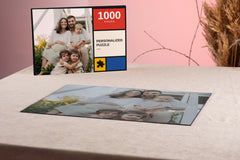
How are custom puzzles made? A photograph is prepared to fit the chosen format, reproduced as a physical picture, and divided into interlocking pieces before packaging. Your main decisions happen before that work begins: the image, its crop, the piece count, and any personal message. A clear original photo gives the finished puzzle a useful starting point.
With a personalized photo puzzle, the familiar picture becomes something the recipient puts back together. Think about both the photograph and the activity. A favorite portrait may be meaningful, but the amount of detail and the piece format also affect what the person will enjoy assembling.
From upload to puzzle: how are custom puzzles made?
The basic sequence is image preparation, printing, forming the interlocking pieces, and packaging the result. In a common board-puzzle process, a printed picture is mounted onto a supporting board and cut into a pattern of connected shapes. The purpose is to turn one continuous image into pieces that recreate that same picture when assembled.
Die-cutting is one way to form those pieces: a shaped cutting tool divides the printed board along a predetermined pattern. The photograph and the cut pattern serve different purposes. The photograph supplies the visible subject, while the cut gives each piece an outline and a place within the finished whole.
Preparing the photograph for printing
The image needs to fit the selected puzzle's proportions. A close crop can remove an important hand, ear, or person at the edge, so compare the intended picture area before ordering. Keep the main subject clear and leave enough surrounding detail to help the person recognize different parts of the scene.
GiftMusea uses one uploaded image per puzzle. If you want several photographs in a collage, combine them into one finished image before uploading. Make sure the faces remain large enough to see at the chosen size. A single clear picture can work better than several small photos that lose their details when reduced.
Start with the original file and look at it at full size. A small image in a message thread may hide blur or compression. Read how to choose a photo for a custom puzzle before deciding between a wide scene, a portrait, and a collage.
What printing and cutting change
Printing turns the digital image into the visible picture on the puzzle. It does not create missing detail in an unclear original. Choose a photo with distinct subjects and some variation in color or texture, especially if the recipient prefers plenty of visual clues rather than large areas that look nearly the same.
Once divided into pieces, the image is assembled by matching shapes and picture details. GiftMusea's puzzles have a premium matte finish, a tight fit, and no glare. The larger-piece XL format and the higher-count formats give you different options for the activity, so select around the recipient's preferences rather than assuming more pieces is always better.
Choose the piece count and finished size together
The 100-piece XL option costs $29.99 and has larger pieces, finishing at 13.5 × 19 in (34 × 48 cm). The 500-piece option costs $44.99 and has that same finished size. The equal dimensions do not mean the experience is identical: the piece count and piece format are part of your choice.
The 1000-piece option costs $64.99 and finishes at 27 × 19 in (68 × 48 cm). The smaller 99-piece puzzle costs $29.99 and finishes at 4 × 6 in (10 × 15 cm). Measure the intended table area and compare photo puzzle piece counts before selecting a format.
The photo gift box and the smaller tube option
The 100-piece XL, 500-piece, and 1000-piece formats come in a sturdy gift box printed with the customer's photo and an optional short message. Keep the wording brief, such as Our weekend at Pine Lake or Dad's garden — 2026. A specific place or moment can make the box personal without a long dedication.
The 99-piece option ships in a clear tube with an aluminum screw cap instead of the photo gift box. Choose it for its small finished format and that packaging, not with the expectation of a box message. If you have a longer story to share, put it on an accompanying card rather than crowding the image.
What you control before production begins
Confirm the original photo, crop, selected option, and any box message as a set. Check names, dates, and whether every important person remains visible. Allow two business days for production, with transit separate, and check the delivery estimate at checkout. Making time for delivery matters as well as the work of producing the puzzle.
FAQ
Can I upload several photos for one custom puzzle?
GiftMusea uses one uploaded image per puzzle. You can include several photographs by combining them into a single finished collage before uploading. Check the whole image at the intended proportions and keep important faces large enough to recognize. A collage should still give the recipient clear subjects to find, rather than many tiny pictures.
Does a higher piece count always mean a larger puzzle?
No. The 100-piece XL and 500-piece options both finish at 13.5 × 19 in (34 × 48 cm), while the 1000-piece format is larger. Compare the stated dimensions and piece count together. Choose the larger pieces or the higher count according to the recipient's preference, then confirm there is enough table space.
Can I add a personal message to the packaging?
The photo gift box for the 100-piece XL, 500-piece, and 1000-piece formats offers an optional short message. Check spelling and dates and keep it focused on one idea. The 99-piece puzzle comes in a clear tube instead. Use an accompanying card when you want to tell a longer story about the photograph.
Choose your photo and browse the photo puzzle collection for the format you want to make.