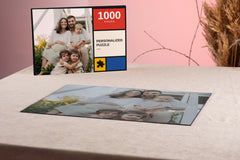
A surprise photo puzzle gift has two possible reveals: the moment the recipient sees the photograph and the moment they see it taking shape in pieces. Decide which one you want before wrapping. GiftMusea prints your photo on the gift box and can print an optional short message there too, so opening the outer wrapping can reveal the image immediately.
That visible photo is also a useful reference during assembly. You can plan around it with ordinary gift wrap or a loose, removable sleeve over the box. The aim is to make the first encounter enjoyable while leaving the recipient free to choose how they use the puzzle afterward.
Choose what you want to surprise them with
Start by naming the surprise in one sentence. It might be “I remembered our first road trip,” “Here is the family photo you love,” or “This ordinary Sunday mattered to me.” A familiar photograph can still make a surprising gift because the format and the care behind it are unexpected. You do not need an unfamiliar or secret image to create a meaningful reveal.

Think about where the gift will be opened. A picture involving a personal milestone, a child, or someone the recipient misses may feel different in a crowded room. Choose a private handoff when you are unsure how they would feel about sharing it. Avoid arranging an audience or recording their reaction unless they are comfortable with that attention.
The puzzle photo should be something the recipient enjoys seeing, even after the first surprise is over. A joke that works once may be less appealing as an ongoing project. If you are choosing a photo of several people, consider whether the scene brings welcome memories for the person receiving it. The surprise should be an invitation to revisit a moment, with room for their own reaction.
Account for the photo and message on the box
GiftMusea's product uses your uploaded photo for the puzzle and prints the photo on its sturdy gift box. The optional short message is printed on the box. Plan your reveal using those actual features: the box can introduce the memory as soon as it is unwrapped, and it can remain beside the pieces as a reference.
If you want to delay seeing the picture, wrap the box externally or place a loose sleeve around it. Keep any tape on the outer wrapping itself, and avoid gluing material to the original box. Make the covering easy to slide off or remove so the recipient can uncover the reference whenever they wish. A temporary cover should not become an obstacle to using the gift.
Before handing it over, look at the wrapped box from every side to see whether the photo or wording is still visible. If your cover hides only the front, an edge may give away a detail you intended to save. This is a wrapping check you can make at home, rather than a request for a different photo on the box or a special hidden design.
Choose your optional wording with the reveal in mind. A location or a year may disclose the memory early, which can be exactly right for your plan. If you prefer the photograph to introduce itself, leave the message out or use a simple personal line. For more wording help, see photo puzzle gift box message ideas.
Plan one: an opening followed by a short session
This plan suits a gift exchange where you have some shared time but no need to finish. Give the wrapped box privately or among people the recipient welcomes. Let them uncover the photograph, tell them briefly why you chose it, and offer to start a few pieces together. They can enjoy the gift even if the box stays closed until another day.
If they want to begin, clear a well-lit surface and give the box photo a visible place. Let the recipient choose where to start: a face, a recognizable object, or a group of edge pieces. Ask whether they would like company instead of assigning helpers automatically. One person quietly sharing the table may feel more comfortable than a group watching every placement.
Choose a natural stopping point, such as gathering the loose pieces or finishing a small region, without turning it into a deadline. Piece count does not establish how long someone will need. If the table must be cleared, decide where the pieces can go before pouring them out. A short session can end with an unfinished puzzle and a satisfying conversation.
Plan two: let the image emerge across several sessions
For someone who enjoys returning to a project, explain that you have chosen a photo puzzle and offer the covered box with its reference available underneath. They may want to begin without studying the full photo, then uncover it when they are ready. Explain the option clearly; there is no need to make them struggle with missing information to earn the surprise.
A removable sleeve can stay nearby after the first opening. Ask whether they want the reference covered, visible, or occasionally available. Some people like guessing the scene from small details, while others prefer to see the whole image immediately. All three approaches work with the same gift, and the recipient can change their mind halfway through.
Agree on a practical home for the project if you are assembling together. A surface that must host dinner every night may be less convenient than a space where work can rest between sessions. If you plan to buy a special board, size it to the finished puzzle: 13.5 × 19 in (34 × 48 cm) for 500 or 100 XL pieces and 27 × 19 in (68 × 48 cm) for 1000 pieces. Keep the box with the remaining pieces so the reference and the project stay together.
Offer company for a later session without requiring progress reports. “I'd love to join you when you feel like working on it” gives the recipient control. A meaningful picture can bring up a story at any stage; there is no reason to save all conversation for the last piece.
Plan three: send a remote gift with an opening note
For a recipient far away, write a short separate note that tells them how to approach the gift. You might say, “Open this whenever you have a quiet moment. The photo is on the box, and you can start the puzzle whenever you like.” That wording lets them enjoy the surprise without waiting for a scheduled video call.
If a gradual reveal matters to you, receive the gift yourself, add an external removable cover, and then arrange your onward shipment. Do not assume the store will add a custom cover or place your separate opening note inside the parcel unless that service is confirmed. If ordering directly to the recipient, plan around the printed box being visible when they open it.
Offer a call as an option: “If you want company while opening it, let me know.” Avoid asking them to keep the parcel unopened for days to fit your schedule. If they prefer to open it alone, you can explain the story behind the photo afterward. Check delivery information for the actual destination and choose the handoff date around confirmed information.
A final reveal checklist
- Choose a photograph the recipient will welcome in the setting where they open it.
- Decide whether the first look happens at unwrapping or during assembly.
- Account for both the photo and optional message printed on the box.
- Use external wrapping or a loose removable sleeve if you want to cover the reference.
- Keep tape and glue off the original gift box.
- Offer the box image whenever the recipient wants help.
- Leave time, workspace, and a stopping point flexible.
- Make company, a call, and reaction photos optional.
If you later want to turn the gift into a wider gathering, the family photo puzzle night guide can help with shared participation. The reveal itself only needs a comfortable setting and a clear choice about when to uncover the picture. Planning the biggest surprise of all? Our custom puzzle proposal guide covers how to pop the question piece by piece.
Questions about a surprise puzzle reveal
What if they recognize the photo from one piece?
Let that recognition be the reveal. You can share why you chose the moment, then ask whether they want to uncover the box image. There is no need to prolong a guessing game after the recipient has made the connection.
Should I assemble some pieces before giving it?
If you want to give the recipient the full assembly experience, leave the pieces in their box. A separate note can introduce the activity without selecting their starting section for them. If you have another presentation idea, consider whether they would enjoy it before altering the gift.
What if they do not want to start that day?
Offer the story behind the photograph and let the gift wait. Opening and assembling are separate choices. A recipient can appreciate a personal gift without making space for the activity immediately or showing a particular reaction.
Choose your preferred reveal, then review the available options for a personalized photo puzzle. You can also browse photo puzzle gifts while deciding how to present your memory.