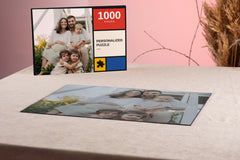
The best personalized puzzles for adults offer clues worth following: distinct colors, recognizable details, and enough variation to keep similar pieces interesting. Start with a photo the recipient wants to explore, then choose 500 or 1,000 pieces around their experience and table space. A picture full of tiny repeated leaves can feel harder than a larger puzzle with clear buildings and color zones.
1. Decide what kind of challenge they enjoy
Think about the puzzles they actually finish. Do they enjoy sorting small details, or prefer an image with obvious sections they can work on separately? Ask about a recent favorite instead of treating every adult as a 1,000-piece puzzler. If the gift is for a couple, choose a picture with several areas they can divide between them.
With a personalized photo puzzle, the photograph becomes part of that decision. A bright storefront beside a textured stone wall offers different clues from a dark evening portrait. Both can be meaningful, but they ask different things of the person assembling them.
2. Read the photograph as a map of clues
Look for color zones first. A red boat, pale quay, green hillside, and patterned awning create areas you can recognize and sort. Then inspect the boundaries between them: railings, rooflines, paths, and shadows help connect sections. You want variation across the whole picture, including the background, rather than one detailed face surrounded by empty space.
Texture adds another layer. Brickwork, flowers, fabric, and water can provide useful detail, while repeated texture makes neighboring areas harder to distinguish. Neither is automatically good or bad. Pick a balance that suits the recipient: several recognizable objects with one more demanding area often gives them somewhere to begin and a challenge to return to.
3. Choose photos that are hard in a good way
For a traveler, consider a market street from a trip they loved. Different shopfronts, clothing colors, signs, and paving can reward close attention. Keep the original image and make sure important details are clear. The puzzle can invite them to revisit the scene without turning the entire background into a nearly identical patch.
For a gardener, choose a garden view with paths, pots, flowers, and a recognizable building. A close crop of hundreds of similar leaves may be more repetitive than enjoyable. For someone who restores cars, use a photo showing the car and an interesting setting, with enough separation between the vehicle, ground, and background.
A family photo can work for a serious puzzler too. An outdoor celebration with distinct outfits and a detailed setting gives more clues than a tight row of faces against a blank wall. Choose a picture the recipient likes, with everyone visible. Our guide to choosing a custom-puzzle photo helps you assess the image before uploading.
4. Avoid difficulty caused by a poor image
A blurry original, deep shadow hiding the subject, or a very small social-media copy can remove the details you wanted to build. Making the puzzle bigger will not restore missing detail. Open the original file on a larger screen and check faces, distant objects, and the edges. If the important part is unclear there, choose another photograph.
Also watch for large areas of nearly uniform sky, black clothing, sand, or water. These may suit someone who specifically enjoys repetition, but do not add them simply to make a gift harder. A sunset can be beautiful as a photo while leaving much of the puzzle with few recognizable clues. Consider what the recipient will spend time assembling.
5. Compare 500 and 1,000 pieces for adults
The 500-piece option costs $44.99 and finishes at 13.5 × 19 inches (34 × 48 cm). It can suit someone who wants a detailed personal image with a smaller finished footprint. Choose it when the photo already includes repetition, or when you know the recipient prefers 500 pieces. Their preference matters more than choosing the highest count.
The 1,000-piece option costs $64.99 and finishes at 27 × 19 inches (68 × 48 cm). Choose it for a recipient who enjoys larger projects and has room for the finished picture plus sorting. A scene with distinct zones gives them several ways into the image. Compare all options in the photo puzzle piece-count guide. For table space, edge pieces, and how long the build usually takes, see how big a 1,000-piece puzzle is when finished.
GiftMusea photo puzzles have premium matte-finish pieces with a tight fit and no glare. The 500- and 1,000-piece versions come in a sturdy gift box printed with your photo and an optional short message. Piece count changes the project, but the picture still shapes much of the experience. Avoid promising a particular number of hours.
6. Make the gift specific to the puzzler
For a friend who loves city breaks, choose the street where you stopped for breakfast and put One more morning on that street on the box. For a parent who tends a garden, try Your favorite corner, piece by piece. A short message connects the activity to their own interests without crowding the photograph.
Upload one image per puzzle. If you want a collage, combine the photos into a single image before uploading and inspect it as a whole. Distinct pictures can create separate working areas, but tiny individual photos may lose the detail you hoped to include. After the puzzle is finished, the photo puzzle storage and display guide can help with the next step.
A quick check before ordering
Confirm the recipient's preferred piece count, the finished dimensions, and the space they use for sorting. Check the original photo for clear detail, varied areas, and any crop that cuts off people. Review the uploaded image and box message together. Choose the $44.99 500-piece or $64.99 1,000-piece option deliberately, rather than relying on a product's starting price.
FAQ
Are 1,000 pieces always harder than 500?
A higher piece count gives you more pieces to place, but the image matters too. A 500-piece puzzle with repeated foliage or a broad dark area can feel demanding, while a 1,000-piece scene with distinct colors offers recognizable sections. Match both the photo and the count to the recipient's preferences instead of using count as the only difficulty measure.
What photo makes a challenging puzzle enjoyable?
Choose a clear image with details distributed across the scene: different buildings, clothing, plants, or objects. Some repetition can add challenge, while recognizable boundaries give the puzzler clues. Use a subject they care about, such as their garden or a favorite trip. Avoid relying on blur or missing detail to make the puzzle difficult.
Can I use several photos on one puzzle?
Yes, if you combine them into one image before uploading. GiftMusea accepts one uploaded photo per puzzle, so prepare the collage first. Keep each picture large enough to remain recognizable and check the combined file closely. Consider whether separate photos create useful sections or simply add many small details the recipient would not enjoy sorting.
Explore the personalized puzzles collection with a photograph and piece count chosen for the person who will build it.