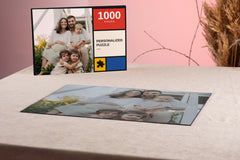
A photo puzzle and photo brick art both begin with a picture, but they invite different kinds of attention. A jigsaw asks someone to find and fit pieces of the image; brick art puts the picture on an interlocking brick-style plate as a keepsake. Decide what the recipient would enjoy doing with the photograph before you compare shape, piece count, or a message.
First choose the experience
Picture the first hour after the gift is opened. If the recipient might clear a table, sort colors, and invite someone to help solve the image, a custom photo puzzle fits that moment. The photo is part of the activity. If they are drawn to a piece-based visual style and want a personalized item to keep in view, look at photo brick art. The product description calls it a picture printed on an interlocking brick-style plate. Its form is distinct from a conventional jigsaw, even though both listings include piece counts.
Neither choice is automatically more personal. The difference is how the recipient meets the memory. A vacation panorama could give puzzle solvers recognizable landmarks to locate. A close-up of two friends might make a strong brick-art image with a short date at the bottom. A photo that matters deeply but contains a large blank sky may be more meaningful than it is easy to assemble as a puzzle. Think about the scene and the person receiving it together.
Compare the current options
| Question | Photo brick art | Photo puzzle |
|---|---|---|
| What is the format? | A picture printed on an interlocking brick-style plate. | A photo made into matte-finish jigsaw pieces. |
| What can I choose? | Heart / 48 Pieces, Heart / 96 Pieces, Rectangular / 46 Pieces, Rectangular / 96 Pieces, or Rectangular / 144 Pieces. | 99 Pcs, 100 Pcs XL, 500 Pcs, or 1000 Pcs. |
| Where can words go? | An optional date or short text is printed at the bottom. | An optional short message is printed on the gift box. |
| What should guide the photo? | Clear main subject, shape-aware crop, and space for bottom text. | Recognizable details and distinguishable areas to work through. |

Open the personalized photo brick art and personalized photo puzzle pages to see their current selections. A piece count tells you how many pieces are listed; it does not by itself describe the finished size, the recipient's experience, or how long a project will take. The puzzle also has a 100 Pcs XL option with larger pieces.
Think about where the message belongs
Words can make either gift feel specific, but their placement is different. On brick art, an optional date or short text appears at the bottom of the piece. That could be a place name, a meaningful day, or a few words the recipient associates with the scene. Keep the line brief enough to support the picture. If the text is the central point of the gift, consider whether it will have enough visual presence in the layout you choose.
On the puzzle, the optional short message goes on the photo gift box, not across the puzzle image. That can make the opening moment personal before anyone begins solving. A line such as “The lake, together, again” could identify a trip without covering the picture itself. If the box message should be a surprise, proofread it carefully; the image and the box play different roles. The photo puzzle collection leads to the current puzzle option and its instructions.
Choose a photo for the brick-style plate
Look for a subject that remains easy to recognize within a heart or rectangular outline. A close portrait, a pet with a distinct face, or a pair of people against a simple background can give the gift a clear focal point. This is composition guidance, not a guarantee that one type of photo prints better than another. If a face sits near the top edge, the heart outline may change how much room it has. Compare the shape with a cropped copy of your image, and leave the original file untouched.
There is a practical text check too: because the date or short line sits at the bottom, ask whether the important part of the image also occupies that space. If a pet's paws, a bouquet, or a sign in the photograph carries the memory, avoid planning a crop that pushes it into the text area. A rectangle may make more sense for a wider scene; a heart may suit a centered subject. Select the listed variant after you have considered both the image and any words.
Choose a photo for the jigsaw
A puzzle rewards looking closely. Visual landmarks such as faces, colorful clothing, a building, or a change in scenery can help someone tell one group of pieces from another. Large areas with nearly the same color may require more patient sorting. None of this makes a photograph objectively good or bad; it helps you match the challenge to the recipient's interest. If the memory is a sunset over a quiet sea, for example, the emotional value may be high while the sky and water provide fewer distinct features for solving.
Consider the people likely to work on it. A photo with several recognizable places to begin can support a shared evening, because different people can notice different details. A close-up portrait may become a more focused activity. The 99, 100 XL, 500, and 1000 piece choices let you select a listed format, but the number alone does not define difficulty. The picture's contrasts, repeated patterns, and distribution of detail matter as well. Use the product page's current information rather than assuming a fixed completion time.
Two example decisions
Suppose your photo is a couple standing close together outside a favorite café, and you want a keepsake that marks the date. The printed brick-style plate gives you a place for that date at the bottom. Try a rectangular crop if the café sign matters, or a heart-shaped crop if the pair is clearly centered and the background is less important. Review both shapes before settling on a piece count.
Now suppose the same couple loves solving puzzles together, and the photo includes a colorful street, storefronts, and their distinctive jackets. Those details can become landmarks while assembling a jigsaw. A short note on the box can explain why you chose that day. The gift is then about returning to the scene through an activity rather than placing it in a display spot. Both paths use the same photograph; the recipient's preferred experience changes the better fit.
Before you order
- Decide whether the goal is a jigsaw activity or a printed brick-style keepsake.
- Check whether your image has a clear main subject and enough room for the intended shape.
- For a puzzle, look for details and color changes people can use while assembling it.
- For brick art, choose Heart or Rectangular and check the exact listed piece option.
- Put the message in the correct place: at the bottom of brick art or on the puzzle box.
- Proofread names and dates, then review the current photo and variant instructions on the product page.
Common questions
Are these two versions of the same puzzle?
No. The photo puzzle is a jigsaw with matte-finish pieces and a photo box. The brick art listing describes a picture on an interlocking brick-style plate. Choose by the experience and appearance you want to give.
Can I use the same photo for both?
You can consider the same source image, then evaluate it for each format. A shape-aware crop and bottom text space matter for brick art; varied details and readable sections matter for the jigsaw. Review each product's instructions when uploading.
Where does my short message go?
The brick art offers an optional date or short text at the bottom. The puzzle's optional short message is printed on its gift box. Check that placement before entering any words.